

Is 'Weak Mentality' a Mental Illness? The Truth You Need to Understand Clearly | Safe and Sound
"Being psychologically weak" (or "having a weak mindset") is not an official clinical diagnosis or psychological term. This phrase is typically used to describe someone who is easily emotional, prone to anxiety, or struggles to handle pressure. However, if these traits persist, intensify, or significantly impact studying, work, relationships, and daily functioning, they may be signs that warrant professional evaluation.
Ngo Thi Sang | Master of Educational Psychology – Applied to Safe and Sound Mental Health Care
Institute of Applied Medical Technology
1. What is psychological weakness?

What is psychological weakness?
"Psychologically weak" is a common concept in everyday life, but it's not a technical term in psychology. It's often used to describe:
- People who are prone to anxiety and emotional outbursts.
- People who lack the ability to control negative emotions.
- People who overthink, lack self-confidence, and are prone to sadness or pessimism are more likely to fall into these states.
- People who are easily influenced by the words, attitudes, or behavior of others.
However, according to psychology experts, labeling someone as "mentally weak" doesn't accurately reflect the nature of the problem. In fact, everyone feels hurt, anxious, or lost at times—this doesn't mean you're "sick," but it's simply a natural part of emotional life.
2. Is "being psychologically weak" an illness?
No. "Being psychologically weak" (or "having a weak mindset") is not in itself a mental illness or clinical diagnosis.
A person may be easily emotional, sensitive, or prone to anxiety in certain situations while still maintaining the ability to study, work, sustain relationships, and recover from stress.
What truly matters is not whether you are "strong" or "weak," but rather the severity, duration, and overall impact of these psychological manifestations.
For example, feeling sad after a breakup or anxious before an exam are normal emotional reactions in everyday life. However, if feelings of sadness or anxiety persist and prevent a person from studying, working, caring for themselves, or maintaining relationships as they used to, a professional evaluation may be necessary.
See also: Recognizing Signs That May Indicate Emotional Vulnerability
3. What is the difference between mental weakness and mental disorder?
Although "mental vulnerability" is not a specific disease, in some cases, accompanying symptoms can be early signs of a mental disorder. Differentiation is extremely important.
|
Characteristic |
Weak psychological state (general) |
Psychological disorders or mental illnesses |
|
Frequency |
It happens occasionally, usually after an event. |
Lasts for several weeks/months |
|
Level of influence |
Mild impact on daily life |
It seriously affects work, studies, and social relationships. |
|
Feeling |
Easily saddened, easily worried, but able to recover. |
Persistent, uncontrollable negative emotions |
|
Behavior |
Avoidance, withdrawal |
This may be accompanied by self-harming behavior or extreme negative thoughts. |
|
Necessary support |
Psychological counseling, lifestyle change |
Intervention from psychologists and psychiatrists |
4. Reasons why you are "mentally weak"
No one is born psychologically "weak" or "strong." In fact, the ability to cope with emotions and stress is shaped by a complex interplay of biological, environmental, and social factors. Feeling tired, anxious, or unable to control your emotions doesn't necessarily reflect weakness but often stems from the following causes:
1. Genetics and biological factors
Scientific studies indicate that brain structure and the nervous system play a crucial role in regulating emotions. Some people have a more sensitive central nervous system than others, making them more susceptible to triggering stress responses when faced with pressure.
For example, overactivity in the amygdala—the brain's center for processing fear—can cause a person to react strongly to situations that others consider normal. At the same time, lower-than-normal levels of serotonin and dopamine—two important neurotransmitters that regulate mood—can lead to mood swings and negative thinking.
In particular, if you have a family history of depression, anxiety, or mood disorders, your risk of developing similar psychological sensitivities is higher. This is not your fault but rather a biological factor that needs to be recognized so you can better understand and care for yourself.
2. Living environment and past experiences

Causes stemming from living environment and past experiences
What you experienced during childhood and your psychological development has a profound impact on how you perceive the world and process emotions today.
- If you grew up in an environment lacking love or experienced physical or emotional abuse, you may have developed weak defense mechanisms or a lack of skills in identifying and regulating healthy emotions.
- Experiences of criticism, comparison, abandonment, or prolonged insecurity keep the nervous system in a constant state of alert, making it prone to overreacting to minor stressors.
Furthermore, parental upbringing significantly influences how you form your self-belief. Children who are discouraged from expressing their emotions and are often pressured to be "strong" may grow up with a sense of self-denial, potentially leading to underlying psychological disorders.
3. Social pressure and cultural prejudices
Living in a society that values achievement, speed, and high performance, many people struggle with feelings of "not being good enough," "having to be perfect," or "not being allowed to be weak." This culture inadvertently creates unrealistic expectations, leading to psychological burnout for many.
- Family expectations: Pressure to be excellent, successful, and to behave according to established norms.
- Gender stereotypes: Men are often taught that "men shouldn't cry," while women are often labeled as "overly sensitive" when expressing emotions.
- Comparison on social media: Seeing others more successful and happier can lead to feelings of inferiority and disorientation, even though no one is as perfect as they appear.
All those invisible pressures can easily make you feel "inadequate," leading to the false belief that you are "mentally weak." The truth is, you're just overwhelmed, not weaker than anyone else.
5. When does "emotional vulnerability" become a problem requiring psychological treatment?
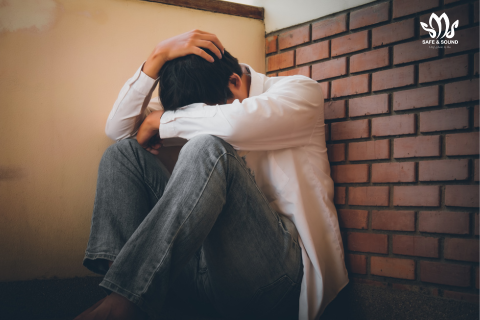
When does "mental instability" require psychological treatment?
You should see a psychologist or psychiatrist if you experience the following symptoms for an extended period (over 2 weeks):
- Constantly feeling anxious and uneasy for no apparent reason.
- Insomnia, weight loss, or noticeable changes in appetite.
- I've lost interest in all my previous hobbies and interests.
- Frequently having negative thoughts such as "I'm useless," "I'm not worthy," "Nobody understands me."
- Difficulty concentrating, forgetfulness, irritability.
- Social avoidance, withdrawing from relationships.
- Having thoughts of self-harm or wanting to end life.
These symptoms could be indicative of depression, anxiety disorders, or mood disorders and require professional evaluation from a qualified professional.
.png)
6. Is "being psychologically weak" caused by a lack of resilience?
Psychological difficulties should not be equated with a lack of resilience.
A person's capacity to tolerate stress is influenced by many factors. Even someone who usually adapts well can become overwhelmed when facing multiple stressors simultaneously.
Admitting that "I am not okay" and seeking support when needed is not a sign of weakness. On the contrary, recognizing your limits can be a crucial step toward proactively taking care of your mental health.
Instead of labeling someone as "psychologically weak," try asking more specific questions:
- What is causing me discomfort or making me feel overwhelmed?
- How long have I been feeling this way?
- How is this affecting my life?
- What support systems do I currently have?
- Do I need professional support?
These questions help shift the focus from self-judgment to understanding and addressing the issue.
When to seek emergency support?
If someone has thoughts of death, suicidal intent, is self-harming, or feels unable to keep themselves safe, this is no longer a situation to handle alone.
Seek emergency medical help immediately, go to the nearest healthcare facility, or ask a trusted person to stay with you and help you access professional services.
If you find you need support from a psychologist or psychiatrist, start by finding a reputable counseling center or service. You can choose in-person or online counseling, depending on your comfort level and circumstances. Most importantly, be open to sharing and receptive to guidance from the professional.

Safe and Sound Clinic - Psychological Support and Family Health
With a team of experienced doctors and experts, Safe and Sound Clinic is a pioneer in providing comprehensive healthcare for you and your family, offering services that cover both medical and psychological care.
"Early Prevention—Timely Support—Long-Term Companion."
If you suspect or encounter any physical or mental health issues, please contact HOTLINE 0964 778 911 (phone/Zalo, 24/7) for prompt assistance and support!
HOW TO MAKE AN APPOINTMENT
You can schedule an online or in-person consultation with our experts:
- At SnS Clinic - IMT Institute
- Or download and schedule a consultation through the Safe and Sound app to manage and track your appointments anytime, anywhere.
Safe and Sound (SnS)—a part of the Institute of Medical Technology (IMT)

See more:
Is prolonged depression and fatigue dangerous? When should I see a mental health professional?
Signs and treatment of anxiety disorders with the support of a mental health professional.
